Buy Now or Wait for a Sale? How to Decide for Digital Game Purchases
Waiting for a discount is not free. What the refund windows, discount rhythms and price-history tools on Steam, PlayStation, Xbox and Nintendo actually say.
You are on a store page tonight, the game is full price, and someone in your head is saying “it’ll be 50% off in a few months.” The decision is not really “now or later” — it is whether waiting is free, and on your platform it usually is not. Waiting costs time with a game you wanted, sometimes the moment the game was worth having, and — on one major platform — it costs you almost nothing at all, because first-party discounts come rarely and without warning. The rest of this article is the arithmetic behind that split, based on the published refund policies, the documented sale schedules, and one price that held for over nine years.
When does buying at full price actually make sense?
Three situations, and the first two are the ones people underestimate.
The game’s value is decaying while you wait. This covers two very different kinds of games. Live and online games have a population problem — the night everyone you know is playing is worth more than any discount on a dead server months later. And cultural-moment games (the single-player ones everyone will be talking about for six weeks) lose their spoiler-free, discussion-window value on a clock. A 30% discount in March does not buy back the February you skipped.
The refund window is your real safety net — where one exists. This is the part most buyers do not realize they have, and the platforms differ sharply. This comparison covers the US storefronts as of November 2026; EU and UK consumer law adds withdrawal rights, and Microsoft’s regional terms vary, so check your own region. Valve’s Steam refund offer — “within two weeks of purchase and with less than two hours of playtime,” for games and software, “for nearly any purchase… for any reason” — is the broadest: buying at full price and discovering you were wrong is a survivable mistake. Sony’s PlayStation Store US cancellation policy allows a game to be canceled “within 14 days from the date of purchase” provided you have not started downloading or streaming it (retrieved November 7, 2026) — narrow, because consoles auto-download, and the window closes the moment a download starts. Microsoft’s Xbox policy is discretionary: refunds are “typically issued for requests made within 14 days of the purchase date, if you haven’t accumulated a significant amount of play time,” with case-by-case handling inside a 90-day request window and explicit limits on how many refunds a purchaser can receive per year (retrieved November 7, 2026). Nintendo of America’s support documentation states plainly: “We are unable to provide refunds or exchanges for mistaken purchases” — there is no safety net on the eShop. That insurance is part of what a full-price purchase buys on Steam, and it expires while you wait.
The price history says waiting is a bad bet. More on how to read that below, but the logic first: if a game’s documented discount pattern is thin, the expected saving from waiting is small, and the expected cost — playing it later, if at all — is not.
What does each platform’s discount rhythm actually look like?
Not all storefronts put discounts in front of you at the same rate, and the difference is documented, not folklore.
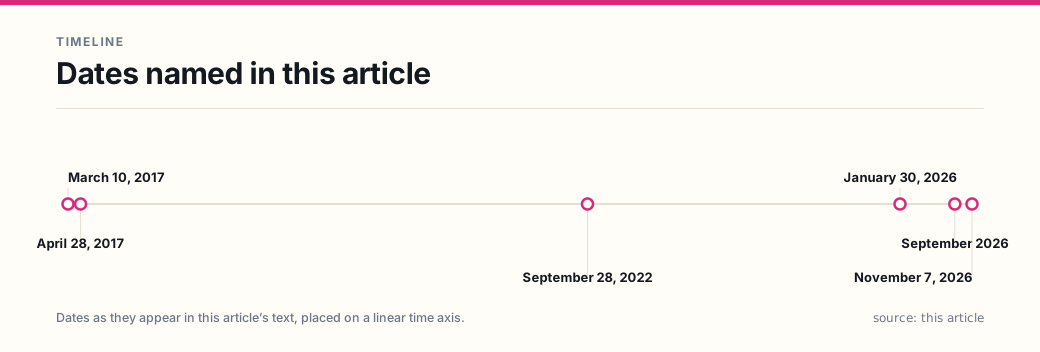
Steam runs four storefront-wide seasonal sales a year, plus constant smaller events. Valve’s own announcement of September 28, 2022 set the current structure: “Starting in calendar year 2023, we’ll be replacing the Lunar New Year Sale with the Spring Sale as one of the four major seasonal sales” — Spring, Summer, Autumn and Winter. On top of those, publishers schedule their own discounts; Valve’s wishlist documentation contemplates discounts as short as eight hours. If a game on Steam has ever been discounted, the probability that it will be discounted again is high, and the seasonal calendar gives you four dependable moments a year to catch it.
Nintendo is the documented counterexample — with a twist. Here is the single most useful price fact in digital game buying, checked directly: Mario Kart 8 Deluxe, released April 28, 2017 at a “suggested retail price of $59.99” per Nintendo’s own press release of March 10, 2017, still lists at “Regular Price: $59.99” with no discount on Nintendo’s US store — retrieved November 7, 2026, nine years and six months after launch. And the discount mechanism Nintendo did run — Nintendo Switch Game Vouchers, a two-voucher set sold to Nintendo Switch Online members redeemable for two eligible digital games — stopped being purchasable on January 30, 2026 at 11:59 PM Pacific Time, per Nintendo’s support documentation; unused vouchers expire 365 days after purchase. But Nintendo first-party games are not literally never discounted, and the counterexample is recent: in September 2026 Nintendo ran a Customer Appreciation Sale in the US, through September 26, cutting first-party titles by up to 30% — including Mario Kart 8 Deluxe to $41.99 from $59.99, per Notebookcheck’s reporting on the promotion. We think the correct reading of the evidence is this: Nintendo’s first-party discounts are rare, unscheduled and unannounced in advance — the flagship title still lists at its launch price to this day, and the September 2026 promotion made gaming news precisely because sales like it are unusual — and there is no wishlist notification to catch them for you. Third-party publishers discount their games on the eShop regularly, and physical copies fluctuate at retail — it is specifically Nintendo’s own games on Nintendo’s own store where waiting is a bet on catching an event like September’s.
PlayStation and Xbox sit between those poles. Both storefronts run frequent publisher-driven sales, and both have wishlists that surface discounted items. Neither Sony nor Microsoft publishes a storefront-wide sale calendar comparable to Valve’s, so the honest statement is: discounts recur often, but the timing is irregular, which is exactly what the tools in the next section are for.
What tools tell you whether a specific game’s wait is worth it?
Two kinds, and they answer different questions.
Price-history trackers answer “how low has it gone, and how often.” Third-party sites such as SteamDB and IsThereAnyDeal chart a game’s price over time across a range of authorized storefronts and flag its historical low. The number that matters for the decision is not the historical low itself but the frequency — a game that hits 60% off every Winter Sale is a safe wait; a game that went 20% off once in three years is not. What these tools are not: a guarantee of the future. Past discount patterns are evidence, not a promise.
Wishlists answer “tell me when it happens.” Steam’s wishlist notification system is documented in Valve’s Steamworks materials: when a wishlisted game gets “any type of discount at or above 20%” that affects the lowest-priced package and lasts more than eight hours, wishlisting users receive an e-mail or mobile notification — with a two-week frequency limit per game that stretches during seasonal sales. Add the game to your wishlist instead of your cart and the storefront monitors the price for you. PlayStation and Xbox offer wishlists as well; their notification behavior is not documented to the same level of specificity, so treat them as useful but less predictable. Nintendo offers no documented wishlist sale notification at all — one more reason the wait there is harder to automate.
Can you buy now and still catch the sale?
On Steam, yes, explicitly. Valve’s refund policy addresses the exact scenario this article is about: “We do not consider it abuse to request a refund on a title that was purchased just before a sale and then immediately rebuying that title for the sale price.” That is the storefront telling you the refund-and-rebuy move is sanctioned — inside the two-week, two-hour window. Set your wishlist notification, play your game, and if the sale lands while you are still inside the window, refund and rebuy.
On PlayStation the same logic is narrower: the 14-day cancellation exists only if you never started downloading, so the refund-and-rebuy move is effectively unavailable once you have played. On Xbox it is discretionary and capped per year. On Nintendo, it does not exist — Nintendo of America states it is “unable to provide refunds or exchanges for mistaken purchases.” (For the full side-by-side, see our refund-policy comparison.) The pattern the evidence actually supports is narrower than the “generous refunders discount often” rule of thumb: Steam combines the broadest refund window with a scheduled, recurring discount calendar. PlayStation and Xbox discount often but refund narrowly or discretionarily. Nintendo neither discounts its own games on a schedule nor refunds a change of mind — the one platform where both the price risk and the regret risk stay with you.
The decision, made explicitly
Buy now at full price when any of these is true:
- The experience has a clock on it — a live game’s active population, a discussion window, a friend group playing this month. No future discount pays you back for a moment that passed.
- You are uncertain and the refund window covers you — on Steam, two weeks and two hours is a real trial period; use it.
- The price history says the discount never comes — which, for Nintendo first-party titles on the eShop, is close to the documented pattern: years at list price between rare, unscheduled promotions.
Wait for the sale when all of these are true:
- The game is single-player and its value does not decay — it will be the same game in four months, minus the marketing.
- The price history shows discounts recur at depths you care about — check a tracker before you form the intention; a wishlist notification then does the watching for free.
- Your backlog can absorb it. If waiting means buying into a pile you already cannot finish, the discount is not saving you money — it is warehousing guilt. (See our guide on managing the backlog before it manages you.)
One boundary the checklist needs: a “sale” from a source outside the authorized storefront is a different decision with different risks, and that one is governed by what a gray-market key actually costs you when it goes wrong.
FAQ
Does Steam refund the price difference if a game goes on sale right after I buy it? No automatic adjustment exists. The documented route is refund and rebuy: request a refund within two weeks with under two hours of playtime, then buy again at the sale price. Valve states it does “not consider it abuse” to do exactly that.
Do Nintendo first-party games ever go on sale? Rarely, but it does happen. Mario Kart 8 Deluxe launched April 28, 2017 at $59.99 and still listed at $59.99 more than nine years later, yet Nintendo’s September 2026 Customer Appreciation Sale cut it to $41.99 (30% off) in the US. The realistic picture: infrequent, unscheduled promotions separated by years at list price — and no wishlist notification to catch them.
How do I know how deep a discount usually gets? Check a third-party price-history tracker such as SteamDB or IsThereAnyDeal. Look at the frequency and depth of past dips rather than the single lowest point — the pattern is the decision-relevant fact, and it is evidence rather than a guarantee.
Is there a best month to buy games? On Steam, the four seasonal sales are the dependable moments — Spring, Summer, Autumn and Winter — a structure Valve formalized starting in 2023. PlayStation and Xbox sales are frequent but irregular, so the reliable mechanism there is a wishlist with notifications, not a calendar.
Should I ever pay full price for a Steam game, then? Yes — when the value decays (live games, discussion windows) or when you want the two-week, two-hour trial period to find out if the game is for you. Waiting is not automatically the disciplined choice; it is a trade, and this article’s point is to price the trade instead of making it by reflex.
Sources
Each source is a primary or official reference, checked before publication. Links open the original.
- Valve — Steam Refunds (store.steampowered.com/steam_refunds page states 'updated 23 April, 2024'; English text verified via ?l=english on November 7, 2026): 'You can request a refund for nearly any purchase on Steam—for any reason'; 'The Steam refund offer, within two weeks of purchase and with less than two hours of playtime, applies to games and software applications on the Steam store'; and, on the exact buy-then-sale scenario: 'We do not consider it abuse to request a refund on a title that was purchased just before a sale and then immediately rebuying that title for the sale price'
- Sony Interactive Entertainment — PlayStation Store cancellation policy, US page (playstation.com/en-us/legal/playstation-store-cancellation-policy/ retrieved November 7, 2026): 'You can cancel a game or game add-on purchase within 14 days from the date of purchase and receive a refund, provided that you have not started downloading or streaming it. Games or add-ons that you have started downloading or streaming are not eligible for a refund unless they are faulty'
- Microsoft — 'Request a refund for digital games' (support.xbox.com, help/subscriptions-billing/manage-subscriptions/digital-goods-subscriptions-refund, retrieved November 7, 2026): 'Refunds for digital games are typically issued for requests made within 14 days of the purchase date, if you haven't accumulated a significant amount of play time'; requests within a 90-day period are possible 'however not all requests will be accepted'; 'There are often limits on the number and type of game refunds allowed... in a given year'; game pre-orders can be canceled 'up to 10 days before the game launches'
- Nintendo of America — Support answer a_id 1981, 'Refund Request for Downloaded Game or DLC' (en-americas-support.nintendo.com, retrieved November 7, 2026): 'We are unable to provide refunds or exchanges for mistaken purchases'
- Nintendo of America — Support answer a_id 45255, 'What are Nintendo Switch Game Vouchers?' (en-americas-support.nintendo.com, retrieved November 7, 2026): vouchers were 'available for purchase to Nintendo Switch Online members through January 30, 2026 11:59 PM Pacific Time'; 'As of 11:59 PM Pacific Time on January 30, 2026, it is no longer possible to purchase more Nintendo Switch Game Vouchers'; unused vouchers expire 365 days after purchase
- Nintendo — 'Mario Kart 8 Deluxe' US store page (nintendo.com/us/store/products/mario-kart-8-deluxe-switch/ retrieved November 7, 2026): 'Regular Price: $59.99', no discount shown, 'Release date April 28, 2017'
- Nintendo press release, March 10, 2017, via Business Wire (reproduced in full at gamingnexus.com/News/39208/Mario-Kart-8-Deluxe-arrives-April-28th-with-a-ton-of-new-content retrieved November 7, 2026): 'Mario Kart 8 Deluxe launches in stores and Nintendo eShop on Nintendo Switch on April 28 at a suggested retail price of $59.99'
- Notebookcheck, 'Nintendo discounts several first-party games by 30% for Customer Appreciation Sale' (notebookcheck.net, September 2026, retrieved November 7, 2026): Nintendo's US Customer Appreciation Sale ran through September 26, 2026 and cut first-party titles by up to 30% — 'Mario Kart 8 Deluxe ... Originally priced at $59.99, the over 9-year old game can be purchased for $41.99 for both digital and physical copies'
- Valve — Steamworks announcement, 'Changes to Four Major Seasonal Steam Sales + Upcoming Seasonal Sale Dates' (steamcommunity.com/gid/103582791433666425/announcements/detail/3282583269823858401 September 28, 2022): 'Starting in calendar year 2023, we'll be replacing the Lunar New Year Sale with the Spring Sale as one of the four major seasonal sales'; the first Spring Sale ran March 16–23, 2023
- Valve — Steamworks documentation, 'Wishlist Notifications' (partner.steamgames.com/doc/marketing/wishlist retrieved November 7, 2026): discount notification e-mails fire for 'Any type of discount at or above 20%' that at minimum affects 'the lowest priced package' and lasts more than 8 hours; e-mail to the same app is frequency-limited to 2 weeks, an interval that 'may be extended in periods of high notification traffic (such as Steam seasonal sales)'