Should you buy a used console? What the warranty, the account and the disc drive decide
A used PS5, Xbox or Switch 2 saves money on paper. The warranty clock started on someone else's receipt, the library never moves, and two parts wear out first.
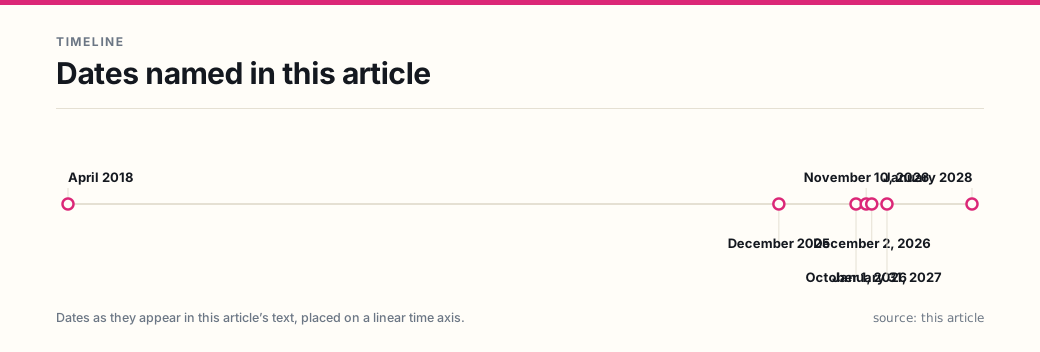
A used console is worth buying when three conditions hold at once: the price gap covers the parts most likely to be worn, the console still signs in and reaches its store online, and you accept that the manufacturer’s warranty runs from the first owner’s receipt, not from your purchase. Miss any of the three and the saving is smaller than the listing suggests — on a PS5 Digital Edition, the two parts a buyer cannot inspect add up to $153.00 before anything else goes wrong.
This article covers the US market and the three current consoles — PlayStation 5 (Sony Interactive Entertainment LLC, SIE), Xbox Series X|S (Microsoft Corporation) and Nintendo Switch 2 (Nintendo of America Inc.). Hardware prices move constantly, so treat every dollar figure here as the list price observed on November 10, 2026, not a quote. Consumer-law details below are US federal rules plus where state law changes the answer; nothing here is legal advice.
When is a used console the right purchase?
Four situations, and the first one decides most of them.
You want the hardware, not the library. The single largest thing a used console does not carry is the previous owner’s digital games. If the reason you are looking at a specific listing is “it comes with 40 games”, that listing is selling you something that cannot transfer — the library stays with the account that bought it.
The discount is larger than the parts you cannot test. Controllers and disc drives wear out before consoles do, and both are priced publicly. A deal that saves $80 on a console whose controller has drift is not a deal.
You can test it before paying, or the seller accepts returns. A private sale in a parking lot gives you neither a warranty nor a return window, so the test has to happen while the money is still in your pocket.
Nobody is waiting for it. A used console bought as a holiday gift in the second week of December has no path back if it fails on the 26th. That is what retail return windows are for, and a stranger on a marketplace does not have one.
If none of those describe you, new or manufacturer-refurbished is the better purchase even at a higher price — and the last section explains why the gap is narrower than it looks.
What does the warranty actually cover for a second owner?
Short answer: usually nothing, in your own name. All three manufacturers write the promise to the original buyer, and two of them tie it to documents you will not have.
| Console | Who the warranty is promised to | Length | What starts the clock | What you need to claim |
|---|---|---|---|---|
| PlayStation 5 | “the original purchaser” | One year | “the original date of purchase” | “a bill of sale or receipt from a retailer with the date of the original purchase” |
| Xbox Series X|S | Not named as “original purchaser” in the summary | One year | “the date of original purchase from an authorized retailer” | Service request via support.microsoft.com |
| Nintendo Switch 2, Switch, Switch Lite, Switch OLED | “the original purchaser” | Twelve months | “the date of purchase” | Proof, “to Nintendo’s satisfaction, that the product was purchased within the last 12 months” |
Read the Sony line literally, because it is the strictest of the three: SIE warrants the hardware “to the original purchaser (‘you’)”, and its service policy then demands “a valid proof of purchase in the form of a bill of sale or receipt from a retailer with the date of the original purchase” before any repair is authorized. A secondhand buyer who does not have the original retailer receipt has no document to present, which is why the honest description of a used PS5 is hardware with no warranty, however new it feels.
Microsoft’s text is worded differently in a way that can help you. It runs the year from “the date of original purchase from an authorized retailer” and does not use the phrase “original purchaser” — so the clock is tied to a purchase rather than to a named person. That is not the same as a promise that coverage follows the hardware: Microsoft does not say the warranty transfers, so treat any remainder as a bonus rather than a right, and ask when and where the console was bought before you pay. Microsoft also sells refurbished consoles with a 90-day warranty, which is 275 days less than the year a new console carries.
Nintendo’s condition is the most practical to test. The console is covered for “twelve (12) months from the date of purchase”, and the original purchaser is entitled to that warranty “only if the consumer can demonstrate, to Nintendo’s satisfaction, that the product was purchased within the last 12 months”. A Switch 2 bought on 25 December 2025 has 45 days of coverage left on 10 November 2026. Bought in the spring of 2025, it has none.
What ends a claim even for the original owner
Each policy has exclusions a used buyer should read as a list of things to check.
- A missing or altered serial number. Sony excludes coverage if the product “has had the serial number altered, defaced or removed”; Nintendo excludes the same. A shell swap or a refurbished case can put a console outside its own warranty.
- A console that has been opened. Sony excludes damage caused by “opening the product or any action taken within it by anyone who is not a representative of SIE or an SIE-authorized service provider”. A previous owner who replaced thermal paste to fix a noisy fan has changed who can claim.
- Liquid, drops, and unauthorised repair. All three exclude damage from external causes, and Microsoft adds “damage caused by repairs or modifications by someone other than Microsoft or a Microsoft-authorized service provider”.
- A sale marked “as is” or “with faults”. Sony’s policy says outright that it “does not cover products sold and clearly marked ‘AS IS’ or with faults”.
One counterweight, because it comes up in every used-console argument: in April 2018 the Federal Trade Commission sent warning letters to six companies selling “automobiles, cellular devices, and video gaming systems”, warning that terms requiring specified parts or service providers to keep a warranty intact “generally are prohibited by the Magnuson-Moss Warranty Act” unless the warrantor supplies them free or holds an FTC waiver. A blanket “the seal is broken, everything is void” claim is the kind of term the FTC objected to. What that does not do is convert the previous owner’s failed repair into a manufacturing defect — which is the thing you are actually worried about when you buy secondhand.
If the seller is a business, do you get a warranty anyway?
Sometimes yes, and this is the part secondhand buyers miss. Federal warranty law treats a business seller differently from a private one.
The FTC’s guidance for sellers puts it plainly: “An implied warranty of merchantability on a used product is a promise that it can be used as expected, given its type and price range”, and those implied warranties “apply only when the seller is a merchant who deals in such goods, not when a sale is made by a private individual.” So a pawn shop or a used-game chain that deals in consoles carries an implied promise that the thing works as a used console should; the person selling their own console on a marketplace does not.
A merchant can usually disclaim that promise — “the law in most states allows you to disclaim implied warranties” — but the disclaimer has to be conspicuous, and it is not available everywhere: “Some states do not allow you to sell consumer products ‘as is.’ In those states, sellers have implied warranty obligations that cannot be avoided.” One floor survives any disclaimer, and it is narrower than it is usually quoted as being: the FTC writes that if an as-is product “proves to be defective or dangerous and causes personal injury to someone, you still may be liable under the principles of product liability”. Note the modal. That liability runs through product-liability law, not through the implied warranty the seller just disclaimed, which is why the same page’s summary line — “you cannot avoid responsibility for personal injury” — is a shorthand rather than a guarantee of recovery.
How strictly this is enforced, and what a secondhand dealer must disclose, varies by state — several states impose their own rules on pawnbrokers and secondhand dealers on top of the federal baseline, so the answer to “can this shop sell me a dead console as is” depends on where you are standing.
One narrow federal right is worth knowing because it is often assumed to be broader than it is. The FTC’s Cooling-Off Rule gives three business days to cancel a sale of $25 or more made at your home, or $130 or more at a temporary location such as “hotel or motel rooms, convention centers, fairgrounds”, but it does not reach purchases made at a seller’s permanent store, or sales “conducted and consummated entirely by mail or telephone”. A console bought at a convention booth can fall inside it. A console bought online cannot.
What does not move with the console?
Three things, and only the third is obvious.
The digital library. Sony’s terms are explicit that a purchase is “a personal license to use that product for private, non-commercial use” and that the license “is not transferable unless your local applicable laws say it must be”. The same document warns that words like “own” and “purchase” do “not mean or imply any transfer of ownership of any content, data or software”. Video content bought on the account is tied to it outright: it “cannot be transferred from one Account to another”. This is the same rule that makes a digital game library worth less than a disc collection, and it is covered in more detail in our guide to what you actually own when you buy a digital game.
The account itself, and anything tied to it. A used console arrives signed out at best, and the previous owner’s profile may still be present. Two things follow: the seller should remove their account and reset the console in front of you, and you should never buy a console that arrives already signed in — you cannot tell what the account is authorized to do, and you do not want someone else’s payment method attached to hardware in your house.
The warranty clock, as covered above. What does move is the disc collection, and that is now the strongest argument for buying a console with a drive. Sony’s own product page carries a standing notice: “From Jan. 2028, newly released games on PlayStation will be available for purchase on PlayStation Store and at retailers in digital format only”, while “discs for games released before Jan. 2028 can continue to be played on this console”. A drive bought in 2026 therefore plays a fixed back catalogue rather than the next five years of releases — which changes the value calculation, and is covered in disc versus digital.
What can be permanently wrong with a console a photo will not show?
Four failures do not photograph, and each has a specific test.
A device-level ban. Microsoft’s community standards say the company “may permanently suspend a profile or device if we can no longer trust it due to a severe violation”, and that under permanent suspension the owner “forfeits all licenses for games and other content, XBOX subscriptions membership time, and Microsoft account balances”. A permanently suspended console still turns on and still shows a dashboard; what it cannot do is reach the Microsoft Store or Xbox services. The test is to open the store over Wi-Fi, not to watch it boot.
A console that was reported stolen. Under Uniform Commercial Code § 2-403(1), “a purchaser of goods acquires all title which his transferor had or had power to transfer” — and a thief has no title to give. The practical consequence is that a console reported stolen can be taken back from you even though you paid in good faith, and your remedy is against the person who sold it. Details, including how much protection a licensed dealer or pawn transaction gives you, vary by state. Ask for a serial number and a receipt, and walk away from a seller who will not show either.
A repaired or opened unit. Covered above: it removes the manufacturer’s coverage, and it is the main source of the failures that show up in month two.
A missing disc drive. On a PS5 Digital Edition or a PS5 Pro, the drive is a separate $79.00 accessory that fits only the CFI-2000 and CFI-2100 slim groups and the Pro, and Sony states that an “internet connection required to pair Disc Drive and PS5 console upon setup”. A listing that advertises “disc console” when the drive is a bolt-on is describing two purchases as one.
What should you check before you hand over the money?
Run these in order, with the seller present. The first three are the ones that fail.
- Read the model number, not the listing title. On a PS5 it tells you whether the console is a launch unit (CFI-1000 group) or a slim (CFI-2000 or CFI-2100 group), which decides whether a detachable drive is even compatible.
- Sign in, or reach the sign-in screen, on your own account. A console that demands a passcode you do not have is not yours yet.
- Connect to the internet and open the store. This is the ban test — a dashboard proves nothing.
- Install and launch something. From disc if the console has a drive, so the drive is tested; otherwise a free download, so the SSD is.
- Test both controllers properly: both sticks for drift, both triggers, the d-pad, and the battery level after ten minutes.
- Play for ten minutes and listen. Fan noise at idle and a hot exhaust on an idle dashboard are both signs of a console that has been run hard in a hot room.
- Check every port: HDMI, USB, and the power socket, including whether the HDMI connector is bent.
- Match the serial number on the case against the one in the system settings, and ask for the original receipt. The receipt is the only document that can make a warranty claim possible.
- Ask to see it reset. Factory reset in front of you, then pay.
The one thing not on the list is the box. Sony states its warranty is “the same whether or not you register your product”, and no manufacturer here requires the packaging, so a missing box is a negotiating point rather than a reason to walk.
How large does the discount have to be?
Big enough to cover the parts that wear, because on a private sale the discount is your entire warranty. Here are the parts, at the full and estimated retail prices published on November 10, 2026 — Microsoft was discounting several controller colours that day, so the controller figure is the full price rather than the price of the week.
| Part | List price | When it is the thing that fails |
|---|---|---|
| DualSense Wireless Controller (PS5) | $74.00 | Stick drift and battery wear are the most common console complaint |
| Disc Drive for PS5 Digital Edition and PS5 Pro | $79.00 | Missing entirely from a “digital” listing, or dead on a used slim |
| Xbox Wireless Controller | $69.99 ERP ($64.99 for the standard black) | Same wear pattern: sticks, bumpers, battery door |
Add the first two and you have $153.00 — the bill for the two parts a buyer cannot inspect on a PS5 Digital Edition before paying. To see the order of magnitude: $153.00 is 19.1% of the $799.99 Microsoft lists for a 1 TB Series X, so a “20% off” used price roughly disappears the first time a controller and a drive both need replacing.
A worked example, with hypothetical prices: a 1 TB Series X listed at 30% below its $799.99 list price is $559.99, a saving of $240.00. Replace one controller at $64.99 and $175.01 of the saving is left to cover the risk of no warranty at all, no return window, and a console of unknown age. At 25% off, the saving is $200.00 and the remainder is $135.01. Both can still be good purchases — but only if the console passes the tests above, because a failed unit turns a $240.00 saving into a $559.99 loss.
When should you buy new or manufacturer-refurbished instead?
Buy new when the warranty is the product you actually want: a full year from your own purchase date, with your own receipt, plus a retail return window. Buy manufacturer-refurbished when you want most of that at a lower price.
Microsoft’s Certified Refurbished consoles are the clearest example because the terms are published: “each device includes an extensive 90 day warranty”, and Microsoft Store’s holiday terms cover physical products “purchased between October 1, 2026 - December 2, 2026”, returnable “through January 31, 2027”, provided “the return process must be started within 60 days after customer receives the product”. Ninety days is a quarter of what a new console gets — but ninety days plus a return window is a different product from a private sale with neither. Our guide to refurbished electronics covers what refurbished grading actually promises.
The general rule: as the refurbished price approaches the used price, refurbished wins, because the difference is a warranty and a return address. Used wins only when the gap is wide enough to pay for the failures in the table above.
FAQ
Does a PS5 warranty transfer to a second owner? Not as a rule. SIE warrants the console to “the original purchaser” and requires “a bill of sale or receipt from a retailer with the date of the original purchase” before authorizing service, so the receipt decides more than the calendar does.
Do the seller’s digital games come with the console? No. A PlayStation Store purchase is a non-transferable personal license, and Xbox licenses sit on the account — which is why the console should be reset in front of you before you pay.
How do I check whether a used Xbox has been banned? Reach the Microsoft Store online with the console. Microsoft may “permanently suspend a profile or device”, and a suspended console cannot reach the store or Xbox services even though it still boots.
Is a used console without the box a problem? No. Nothing in the three policy texts quoted above asks for the packaging, and Sony states its warranty is “the same whether or not you register your product”. The receipt is the document that matters.
Is manufacturer-refurbished better than used? Usually, when the prices are close. Refurbished carries a published warranty — 90 days at Microsoft — and a return window; a private sale carries neither, so the discount has to be worth more than both.
Does the January 2028 digital-only change make a disc console more valuable? It sets a ceiling on the drive’s usefulness: discs released before January 2028 keep working, but new PlayStation releases will be digital-only, so the drive is a back-catalogue tool rather than a long-term hedge.
Frequently asked questions
- Does a PlayStation 5 warranty transfer to a second owner?
- Not as a rule. Sony Interactive Entertainment warrants the console to 'the original purchaser' for one year, and its service policy requires 'a valid proof of purchase in the form of a bill of sale or receipt from a retailer with the date of the original purchase'. A console bought secondhand therefore has no claim in the new owner's name unless the original receipt comes with it and Sony accepts the claim.
- Do the seller's digital games come with a used console?
- No. A PlayStation Store purchase is 'a personal license to use that product for private, non-commercial use' and that license 'is not transferable unless your local applicable laws say it must be'. The console is hardware; the library stays with the account that bought it, which is why a factory reset before you pay is the check that matters.
- How can I tell whether a used Xbox has been banned?
- Sign in and reach the Microsoft Store while you are still with the seller. Microsoft says it 'may permanently suspend a profile or device if we can no longer trust it', and a permanent suspension makes the owner forfeit all game licenses, subscription time and account balances. A console that cannot reach the store online is not a console you can use.
- Is a used console worth it without the original box?
- The box does not matter, because Sony's warranty is 'the same whether or not you register your product'. The receipt does matter, since it is the document that starts the one-year clock. Missing accessories are a price argument: a DualSense controller lists at $74.00 and an Xbox Wireless Controller at $69.99, so a console sold without one is worth that much less.
- Does Sony's January 2028 digital-only change make a disc console more valuable?
- It changes what the drive is for. Sony states that 'from Jan. 2028, newly released games on PlayStation will be available for purchase on PlayStation Store and at retailers in digital format only', while 'discs for games released before Jan. 2028 can continue to be played'. A drive bought now plays a fixed back catalogue, not the next five years of new releases.
- Buy a used console or a manufacturer-refurbished one?
- Refurbished from the maker is the safer buy when the prices are close: Microsoft's Certified Refurbished consoles carry a 90-day warranty, and Microsoft Store adds a return window that no private seller offers. A private sale carries neither, so the price gap should be at least the cost of the parts most likely to be worn.
Sources
Each source is a primary or official reference, checked before publication. Links open the original.
- Sony Interactive Entertainment LLC — 'PlayStation 5 Warranties', Limited Hardware Warranty and Liability (https://www.playstation.com/en-us/legal/warranties/ps5 retrieved November 10, 2026): 'SIE warrants to the original purchaser ("you") that the PS5 hardware... will be free from material defects in material and workmanship for a period of one year from the original date of purchase'; 'This warranty is valid only in the United States and Canada'; 'THIS WARRANTY DOES NOT COVER PRODUCTS SOLD AND CLEARLY MARKED "AS IS" OR WITH FAULTS'; exclusions (F) if the product 'has had the serial number altered, defaced or removed' and (G) damage caused by 'opening the product or any action taken within it by anyone who is not a representative of SIE or an SIE-authorized service provider'; 'The warranty offered by SIE on this Product is the same whether or not you register your product'; service policy: 'A valid proof of purchase in the form of a bill of sale or receipt from a retailer with the date of the original purchase must be presented to obtain warranty service' (that paragraph is set in all capitals on the page; quoted here in sentence case)
- Microsoft Corporation — 'Xbox Console Product Guide, Limited Warranty & Agreement', Xbox Series X|S manual for the US and Canada (https://download.microsoft.com/download/c/5/1/c516c773-0650-4719-8b1e-fbee939075f5/XBOX%20SERIES%20X%20+%20S%20MANUAL%20EN%20FR%20ES%20-%20US%20CA.pdf retrieved November 10, 2026): 'Microsoft warrants that the Microsoft Product will not malfunction under normal use conditions for one year (90 days for accessories and refurbished Xbox consoles) from the date of original purchase from an authorized retailer'; exclusions include 'normal wear and tear, cosmetic damage, damage caused by external causes including being dropped, exposed to liquid, inadequate ventilation, use not in accordance with Microsoft's instructions, hacking, viruses or other malware, and damage caused by repairs or modifications by someone other than Microsoft or a Microsoft-authorized service provider'; service starts with the troubleshooting and online process at support.microsoft.com
- Nintendo of America Inc. — 'Warranty and Service Information', support answer a_id 50404, whose scope sentence covers 'Nintendo video game systems, video game cartridges, and video game accessories' other than a listed set of legacy products, and whose title lists Nintendo Switch 2, Nintendo Switch, Nintendo Switch Lite and Nintendo Switch - OLED Model (https://en-americas-support.nintendo.com/app/answers/detail/a_id/50404 retrieved November 10, 2026): 'Nintendo of America Inc. ("Nintendo") warrants to the original purchaser that the product shall be free from defects in material and workmanship for twelve (12) months from the date of purchase'; 'The original purchaser is entitled to this warranty only if the consumer can demonstrate, to Nintendo's satisfaction, that the product was purchased within the last 12 months'; Nintendo may replace with 'refurbished parts or refurbished products'; the warranty does not apply if the product '(c) is damaged by negligence, accident, unreasonable use' or is damaged by 'unauthorized modifications or tampering'
- Microsoft — Certification Refurbished Xbox listing and store collection (https://www.microsoft.com/en-us/d/xbox-series-s-1tb-certified-refurbished/8ncm2gz33jql and https://www.microsoft.com/en-us/store/collections/certifiedrefurbishedxbox retrieved November 10, 2026): 'Each device includes an extensive 90 day warranty, plus additional extended warranty options'; the same listing carries the Microsoft Store return terms — 'Holiday extended return policy available with eligible physical products purchased between October 1, 2026 - December 2, 2026', returnable 'through January 31, 2027', with the requirement that the 'return process must be started within 60 days after customer receives the product'
- Microsoft — 'Xbox Community Standards', section Consequences, last updated May 2024 (https://www.xbox.com/en-US/legal/community-standards retrieved November 10, 2026): 'If you violate XBOX community standards, you may find restrictions placed on your profile and/or device'; 'We may permanently suspend a profile or device if we can no longer trust it due to a severe violation, or if our attempts to correct repeated negative behaviors are unsuccessful'; 'Under permanent suspension, the owner of the suspended profile forfeits all licenses for games and other content, XBOX subscriptions membership time, and Microsoft account balances'
- Sony Interactive Entertainment — PlayStation Network Terms of Service, last revised April 2026 (https://www.playstation.com/en-us/legal/psn-terms-of-service/ retrieved November 10, 2026): Section 8.4 'No Resale or Commercial Use' — 'you buy a personal license to use that product for private, non-commercial use. That license is not transferable unless your local applicable laws say it must be'; Section 10.1 — use of the terms 'own,' 'ownership,' 'purchase,' 'sale,' 'sold,' 'sell,' 'rent' or 'buy' 'does not mean or imply any transfer of ownership of any content, data or software or any intellectual property rights'; Section 11.9 — 'Video Content is connected to the Account used to order that content and cannot be transferred from one Account to another'; Section 8.13 — virtual items 'may not be sold, transferred, or redeemed for real money or items of value'
- Sony Interactive Entertainment — 'Disc Drive For PS5 Digital Edition Consoles', US store listing (https://direct.playstation.com/en-us/buy-accessories/disc-drive-for-ps5-digital-edition-consoles retrieved November 10, 2026): price displayed as $79.00; 'Add a disc drive to your PlayStation 5 Digital Edition console or PS5 Pro console'; 'This product is only for PS5 Pro consoles and PS5 Digital Edition consoles (CFI-2000 model group - slim & CFI-2100 model group - slim)'; 'Internet connection required to pair Disc Drive and PS5 console upon setup'; 'PS5 consoles sold separately'
- Sony Interactive Entertainment — PlayStation 5 product page (https://www.playstation.com/en-us/ps5/ retrieved November 10, 2026): the standing notice 'From Jan. 2028, newly released games on PlayStation will be available for purchase on PlayStation Store and at retailers in digital format only', with 'Discs for games released before Jan. 2028 can continue to be played on this console'; the Digital Edition description 'with an option to extend your play with an additional disc drive (sold separately)'; and the FAQ answer that 'PS5 consoles are available in a range of digital and disc-based editions... Check online retailers for availability and price details'
- Sony Interactive Entertainment — DualSense Wireless Controller, US store listing (https://direct.playstation.com/en-us/buy-accessories/dualsense-wireless-controller retrieved November 10, 2026): price displayed as $74.00
- Microsoft — Xbox console comparison and Xbox Wireless Controller listing (https://www.xbox.com/en-US/consoles/compare and https://www.xbox.com/en-US/accessories/controllers/xbox-wireless-controller retrieved November 10, 2026): Xbox Series X 1TB Disc Drive shown at $799.99 ERP and Xbox Series S 512GB All-Digital at $499.99; the Xbox Wireless Controller shown at $69.99 ERP for several colors and $64.99 full price for the standard black
- Federal Trade Commission — 'Businessperson's Guide to Federal Warranty Law' (https://www.ftc.gov/business-guidance/resources/businesspersons-guide-federal-warranty-law retrieved November 10, 2026): 'An implied warranty of merchantability on a used product is a promise that it can be used as expected, given its type and price range... implied warranties on used merchandise apply only when the seller is a merchant who deals in such goods, not when a sale is made by a private individual'; 'the law in most states allows you to disclaim implied warranties'; 'Some states do not allow you to sell consumer products "as is." In those states, sellers have implied warranty obligations that cannot be avoided'; and, on the liability that survives a disclaimer, 'even if you sell a product "as is" and it proves to be defective or dangerous and causes personal injury to someone, you still may be liable under the principles of product liability. Selling the product "as is" does not eliminate this liability' (the same page's summary bullet states it more bluntly: 'You cannot avoid responsibility for personal injury caused by a defect in your product, even if you sell "as is"')
- Uniform Commercial Code § 2-403(1), via Cornell Legal Information Institute (https://www.law.cornell.edu/ucc/2/2-403 retrieved November 10, 2026): 'A purchaser of goods acquires all title which his transferor had or had power to transfer except that a purchaser of a limited interest acquires rights only to the extent of the interest purchased'
- Federal Trade Commission — Rule Concerning Cooling-Off Period for Sales Made at Homes or at Certain Other Locations, 16 CFR Part 429 (https://www.ecfr.gov/current/title-16/chapter-I/subchapter-D/part-429 retrieved November 10, 2026): § 429.0(a) defines a door-to-door sale as one with 'a purchase price of $25 or more if the sale is made at the buyer's residence or a purchase price of $130 or more if the sale is made at locations other than the buyer's residence', including 'facilities rented on a temporary or short-term basis, such as hotel or motel rooms, convention centers, fairgrounds and restaurants'; the rule does not cover a transaction 'made pursuant to prior negotiations in the course of a visit by the buyer to a retail business establishment having a fixed permanent location' or one 'conducted and consummated entirely by mail or telephone'
- Federal Trade Commission — 'FTC Staff Warns Companies that It Is Illegal to Condition Warranty Coverage on the Use of Specified Parts or Services', press release of April 10, 2018 (https://www.ftc.gov/news-events/news/press-releases/2018/04/ftc-staff-warns-companies-it-illegal-condition-warranty-coverage-use-specified-parts-or-services retrieved November 10, 2026): warning letters to six companies that market 'automobiles, cellular devices, and video gaming systems'; such statements 'generally are prohibited by the Magnuson-Moss Warranty Act' unless the warrantor supplies the parts or services free or holds an FTC waiver; one quoted example is a term voiding coverage if the product 'has had the warranty seal on the [product] altered, defaced, or removed'